Cybersecurity Infographic Series · Banking, Payments and Financial Regulation

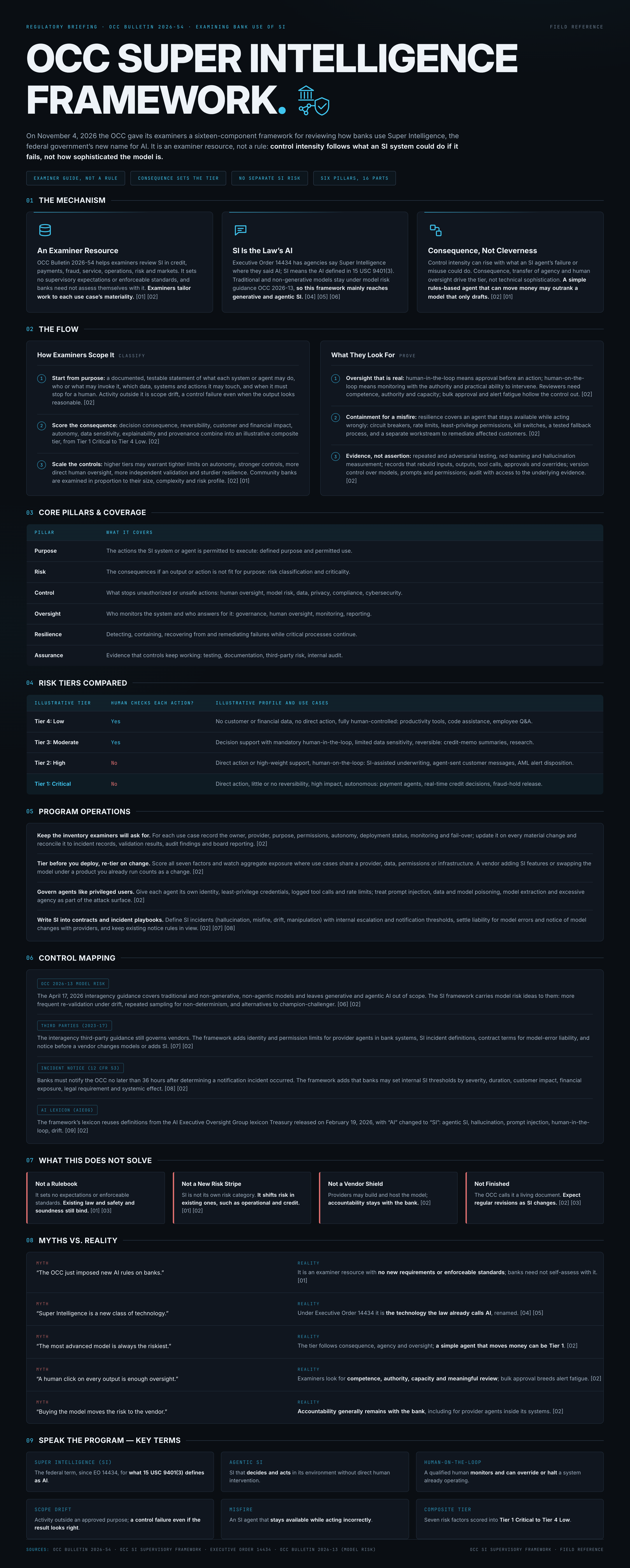
OCC Super Intelligence Supervisory Framework

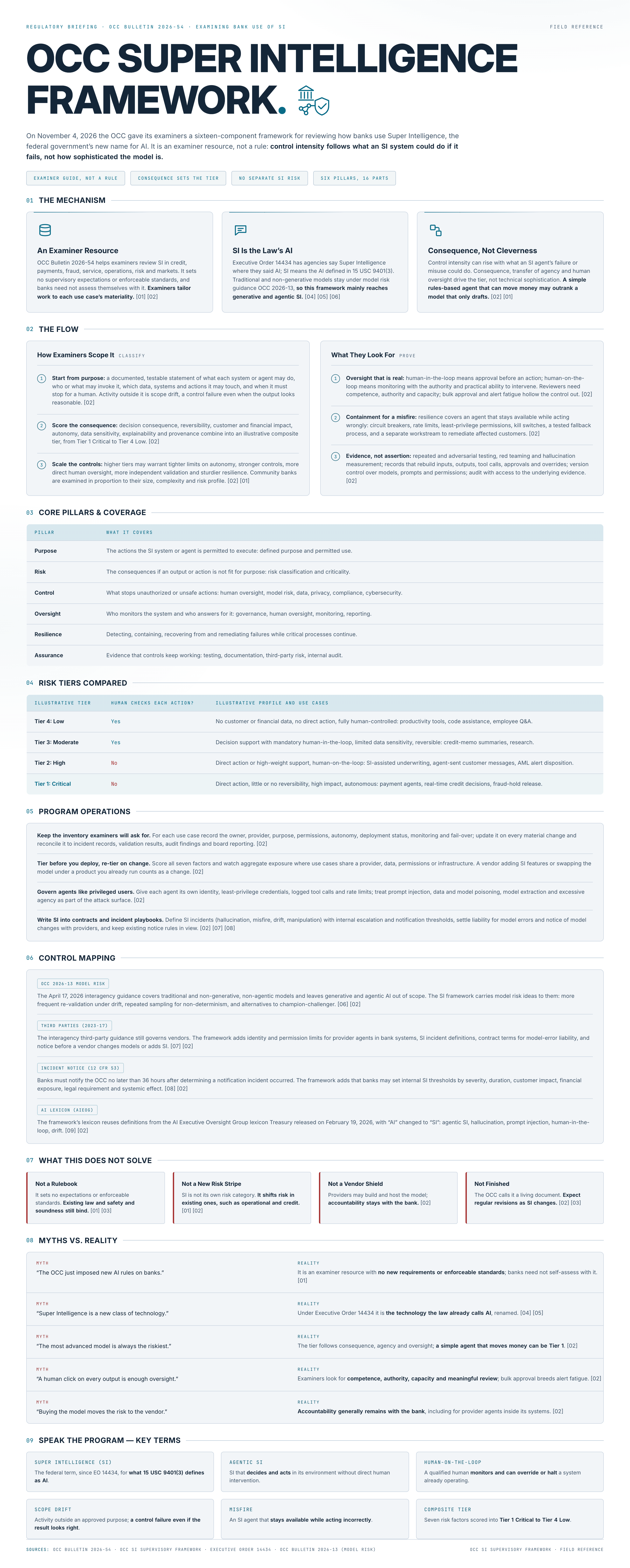
On November 4, 2026 the OCC gave its examiners a sixteen-component framework for reviewing how banks use Super Intelligence, the federal government’s new name for AI. It is an examiner resource, not a rule: control intensity follows what an SI system could do if it fails, not how sophisticated the model is.

Downloads

Free to download, no sign-up. Topic 94 of 103 in the series.

More in Banking, Payments and Financial Regulation

Banking, Payments and Financial Regulation

PCI DSS and Payment Card Security

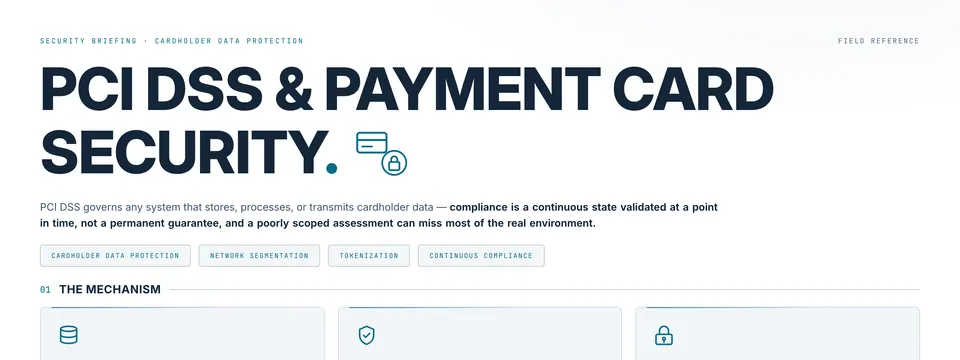
PCI DSS governs any system that stores, processes, or transmits cardholder data — compliance is a continuous state validated at a point in time, not a permanent guarantee, and a poorly scoped assessment can miss most of the real environment.
Banking, Payments and Financial Regulation

SWIFT Customer Security Programme

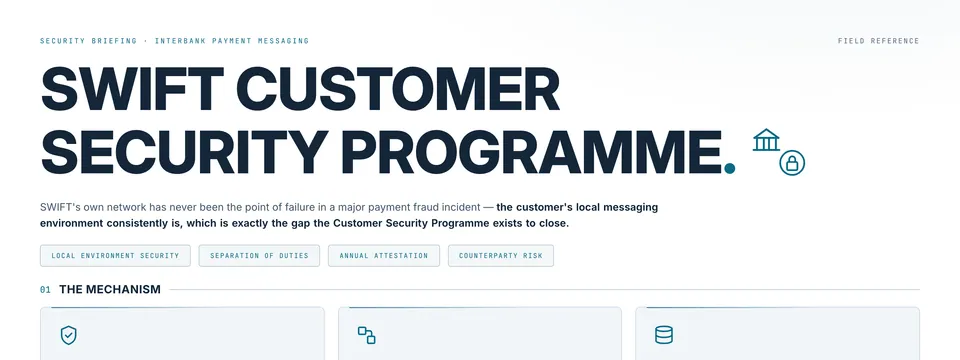
SWIFT's own network has never been the point of failure in a major payment fraud incident — the customer's local messaging environment consistently is, which is exactly the gap the Customer Security Programme exists to close.

Banking, Payments and Financial Regulation

FFIEC and GLBA Safeguards Rule

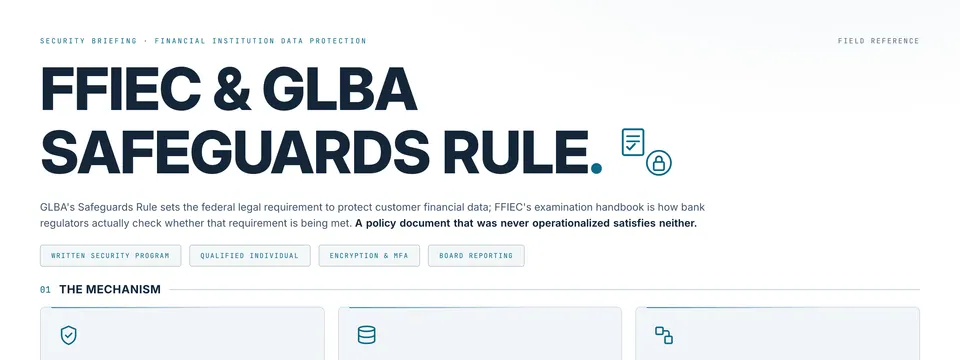
GLBA's Safeguards Rule sets the federal legal requirement to protect customer financial data; FFIEC's examination handbook is how bank regulators actually check whether that requirement is being met. A policy document that was never operationalized satisfies neither.

Banking, Payments and Financial Regulation

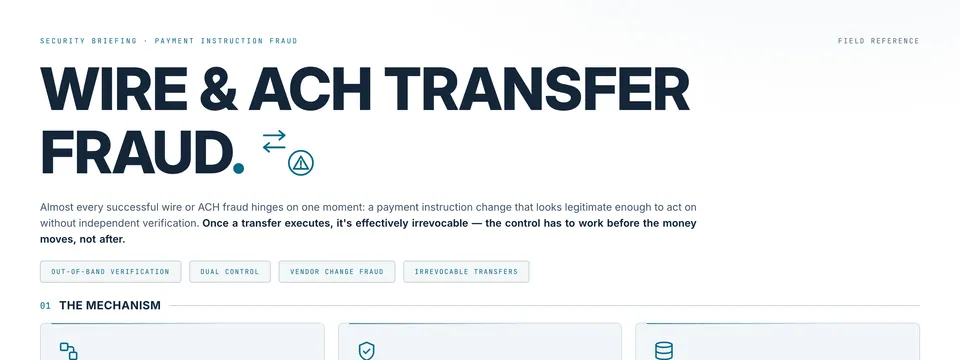
Wire and ACH Transfer Fraud

Almost every successful wire or ACH fraud hinges on one moment: a payment instruction change that looks legitimate enough to act on without independent verification. Once a transfer executes, it's effectively irrevocable — the control has to work before the money moves, not after.

Banking, Payments and Financial Regulation

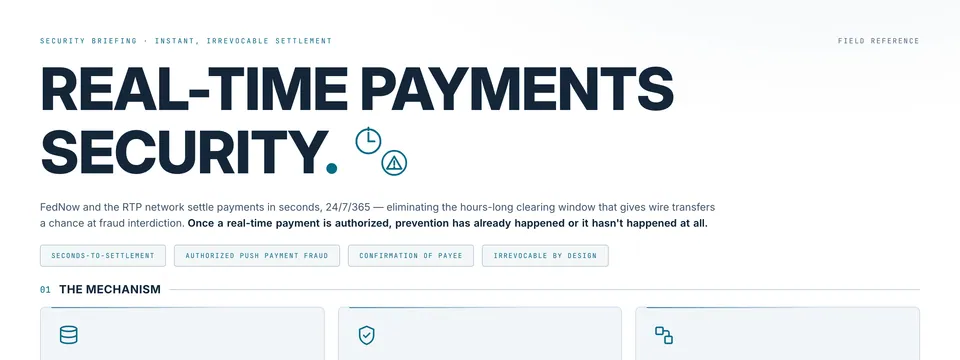
Real-Time Payments Security

FedNow and the RTP network settle payments in seconds, 24/7/365 — eliminating the hours-long clearing window that gives wire transfers a chance at fraud interdiction. Once a real-time payment is authorized, prevention has already happened or it hasn't happened at all.

Banking, Payments and Financial Regulation

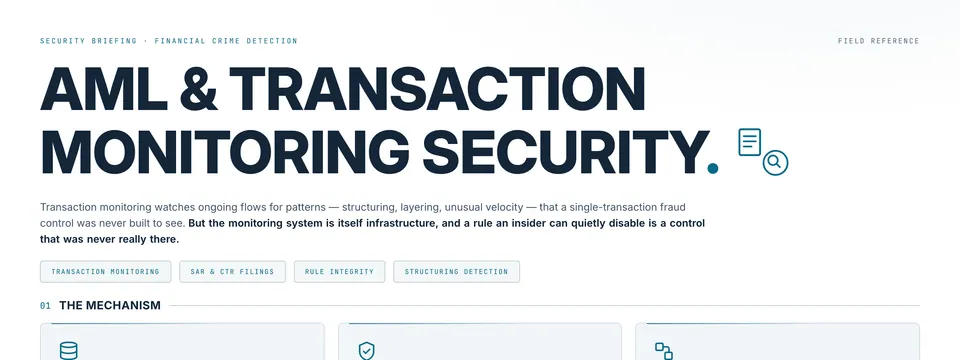
AML and Transaction Monitoring Security

Transaction monitoring watches ongoing flows for patterns — structuring, layering, unusual velocity — that a single-transaction fraud control was never built to see. But the monitoring system is itself infrastructure, and a rule an insider can quietly disable is a control that was never really there.

Back to the full library