Encryption and Key Management
The algorithm is the easy part — the real risk lives in how keys are generated, stored, rotated, and destroyed across their entire working lifecycle.
Cybersecurity Infographic Series · Cryptography and Encryption
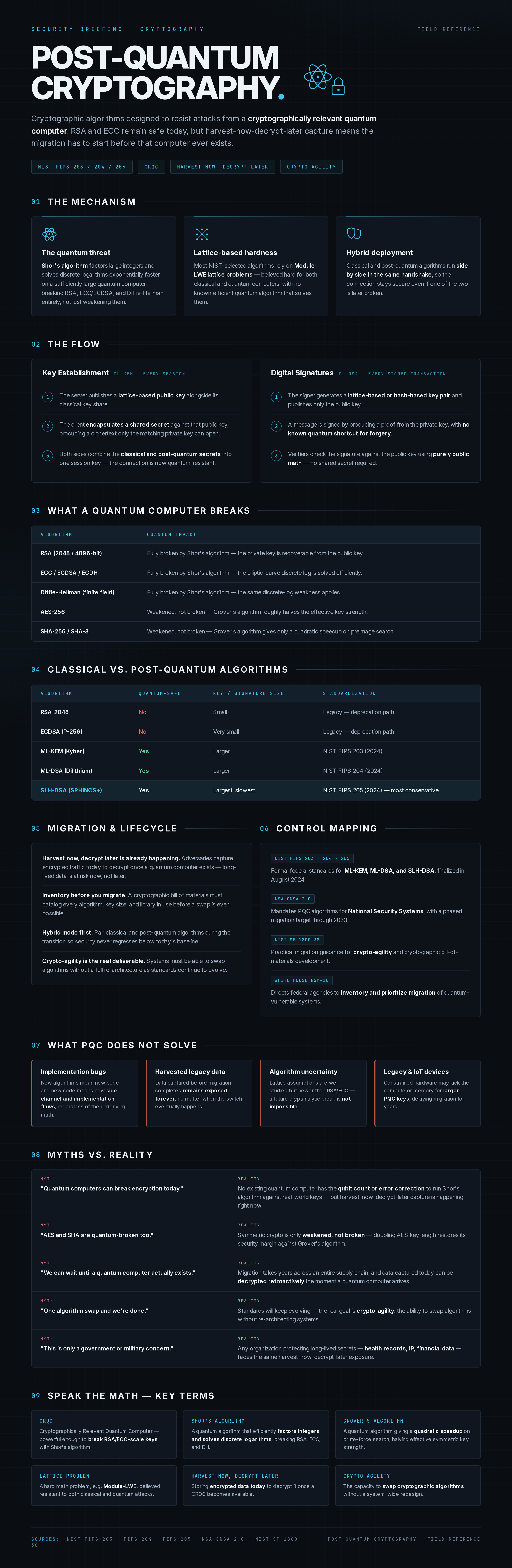
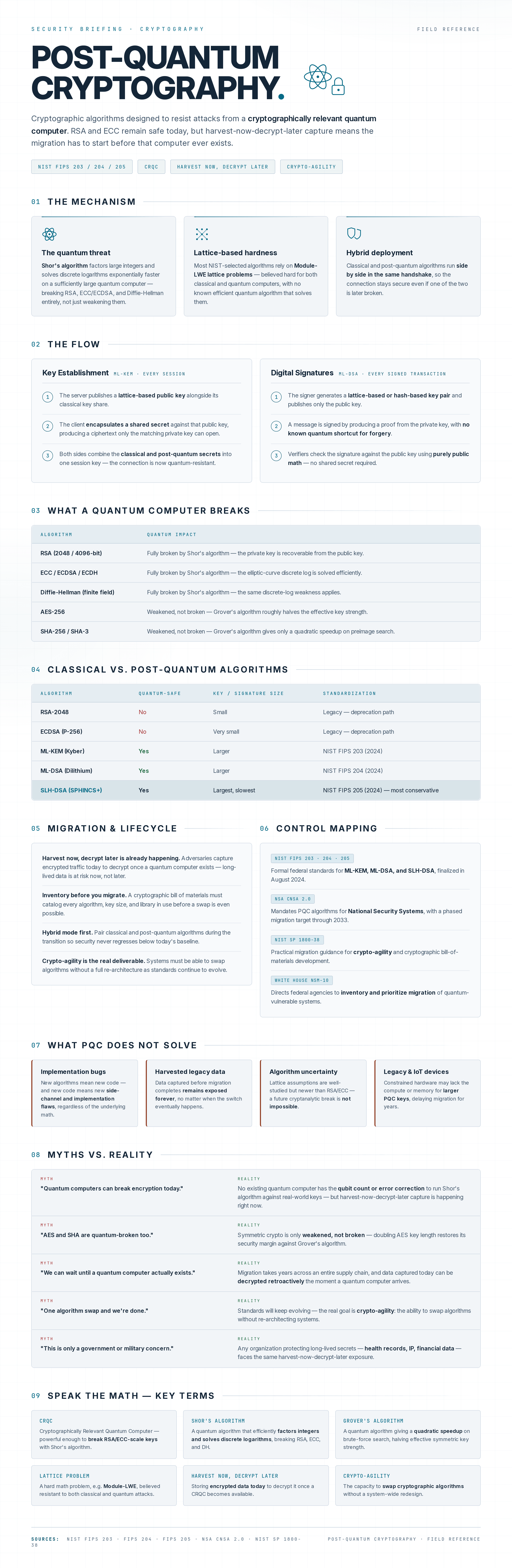
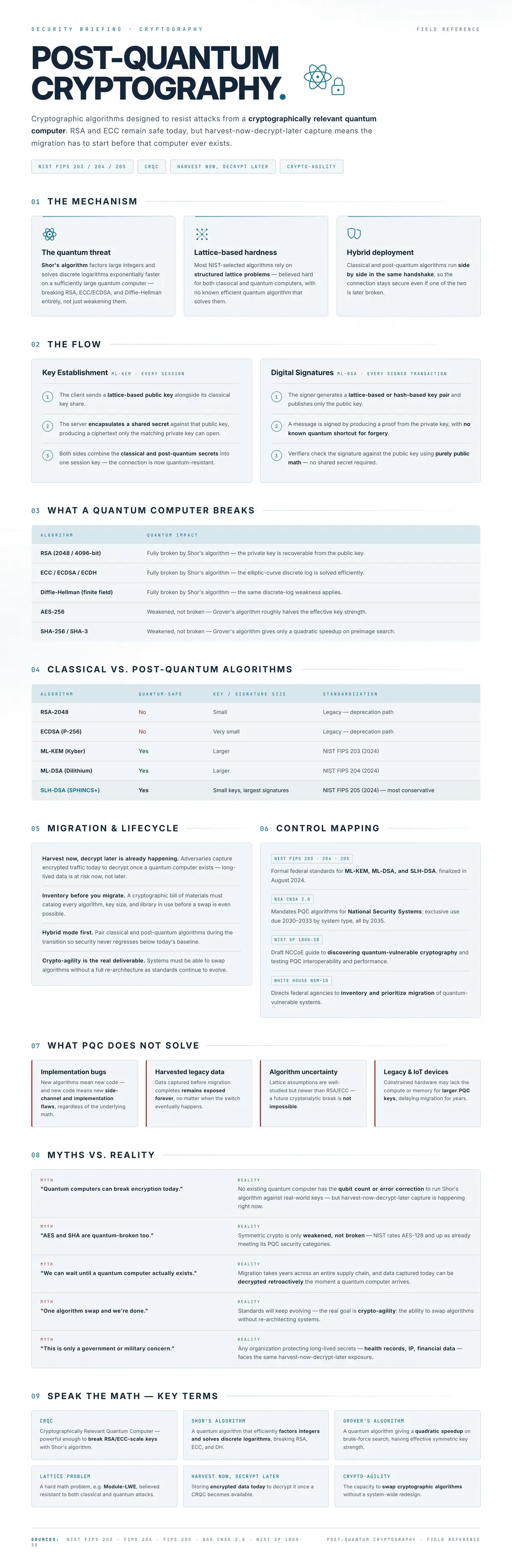
Cryptographic algorithms designed to resist attacks from a cryptographically relevant quantum computer. RSA and ECC remain safe today, but harvest-now-decrypt-later capture means the migration has to start before that computer ever exists.
The algorithm is the easy part — the real risk lives in how keys are generated, stored, rotated, and destroyed across their entire working lifecycle.
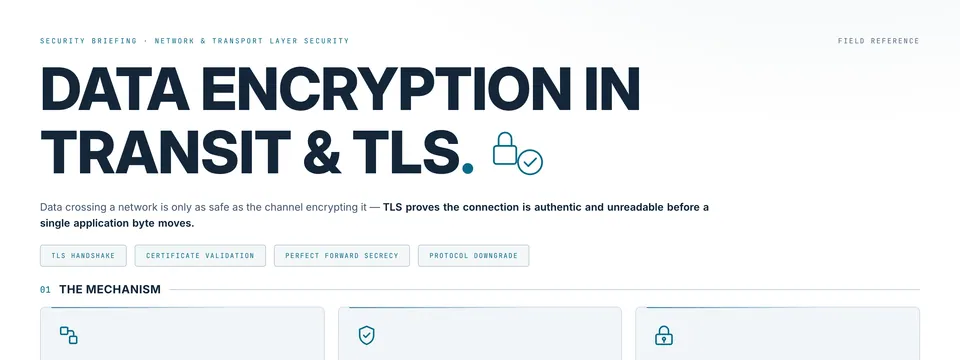
Data crossing a network is only as safe as the channel encrypting it — TLS proves the connection is authentic and unreadable before a single application byte moves.
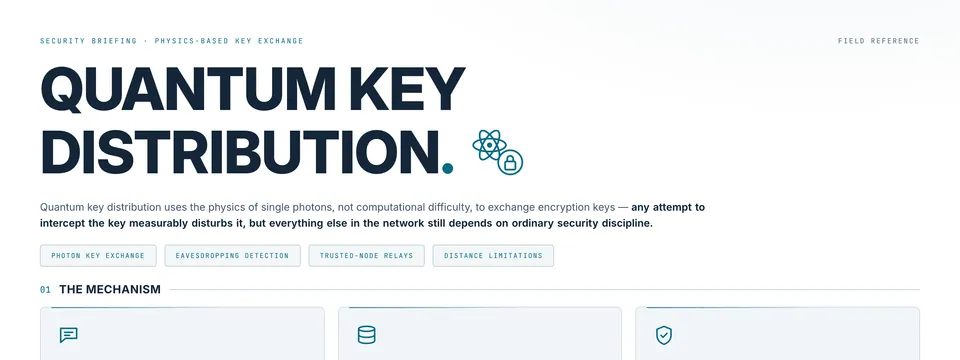
Quantum key distribution uses the physics of single photons, not computational difficulty, to exchange encryption keys — any attempt to intercept the key measurably disturbs it, but everything else in the network still depends on ordinary security discipline.
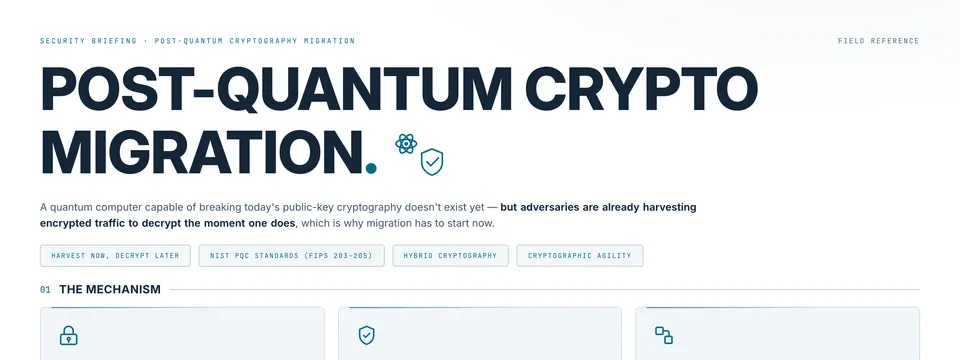
A quantum computer capable of breaking today's public-key cryptography doesn't exist yet — but adversaries are already harvesting encrypted traffic to decrypt the moment one does, which is why migration has to start now.