Zero Trust Architecture
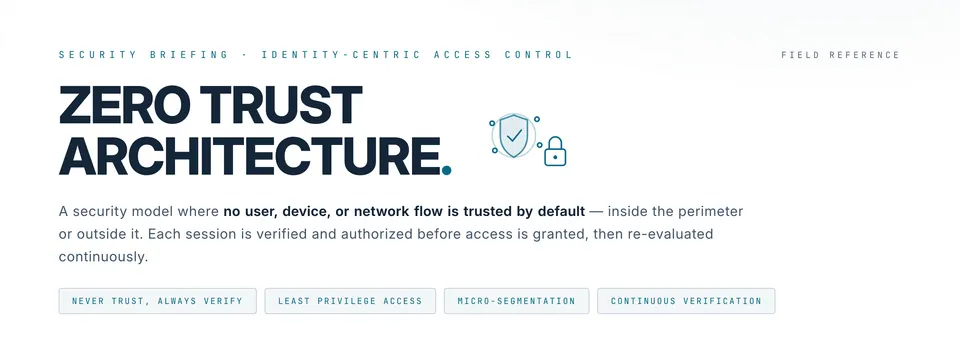
A security model where no user, device, or network flow is trusted by default — inside the perimeter or outside it. Each session is verified and authorized before access is granted, then re-evaluated continuously.
Cybersecurity Infographic Series · Network and Infrastructure Security
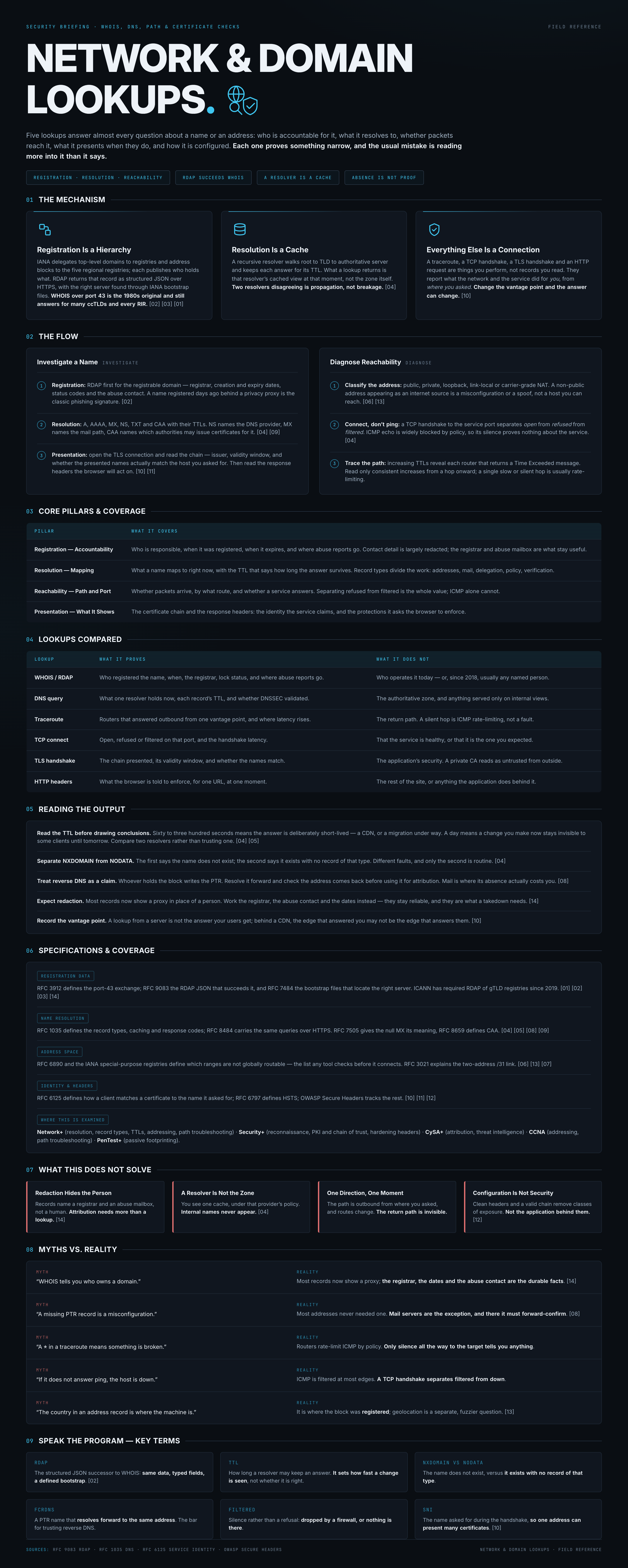
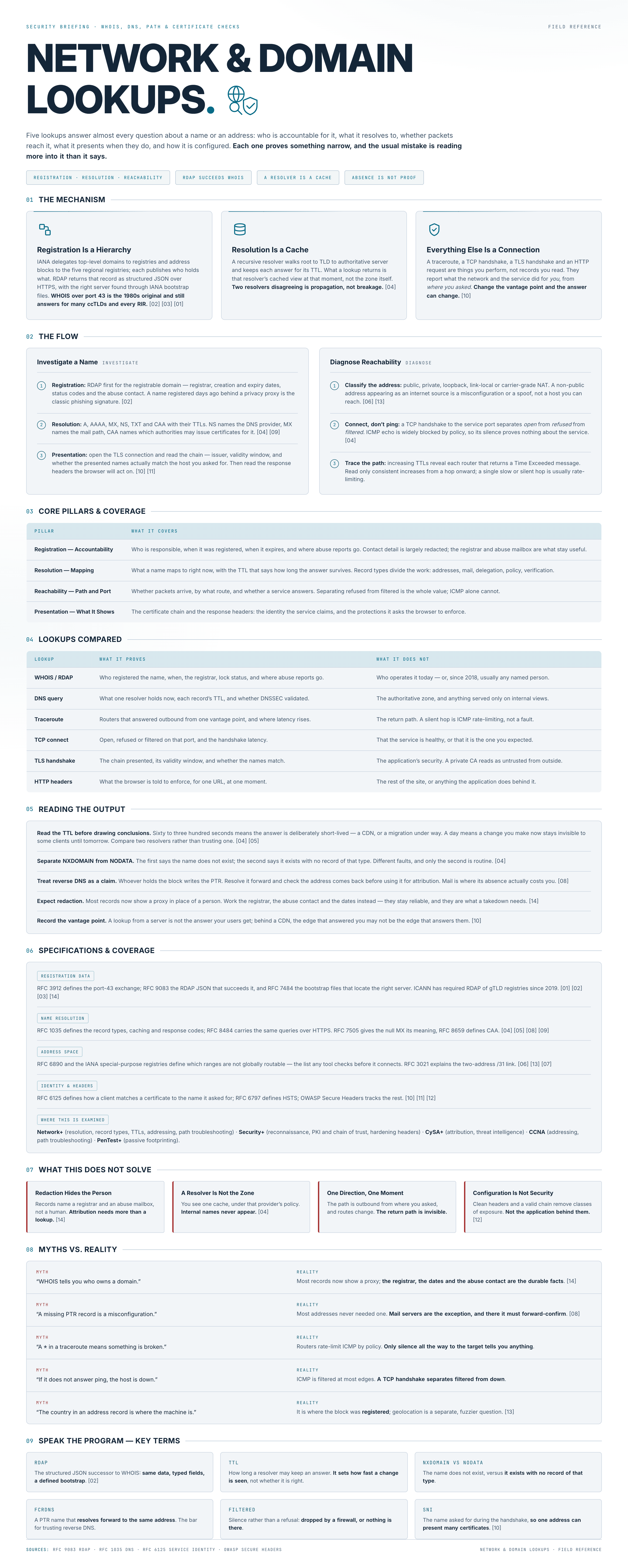
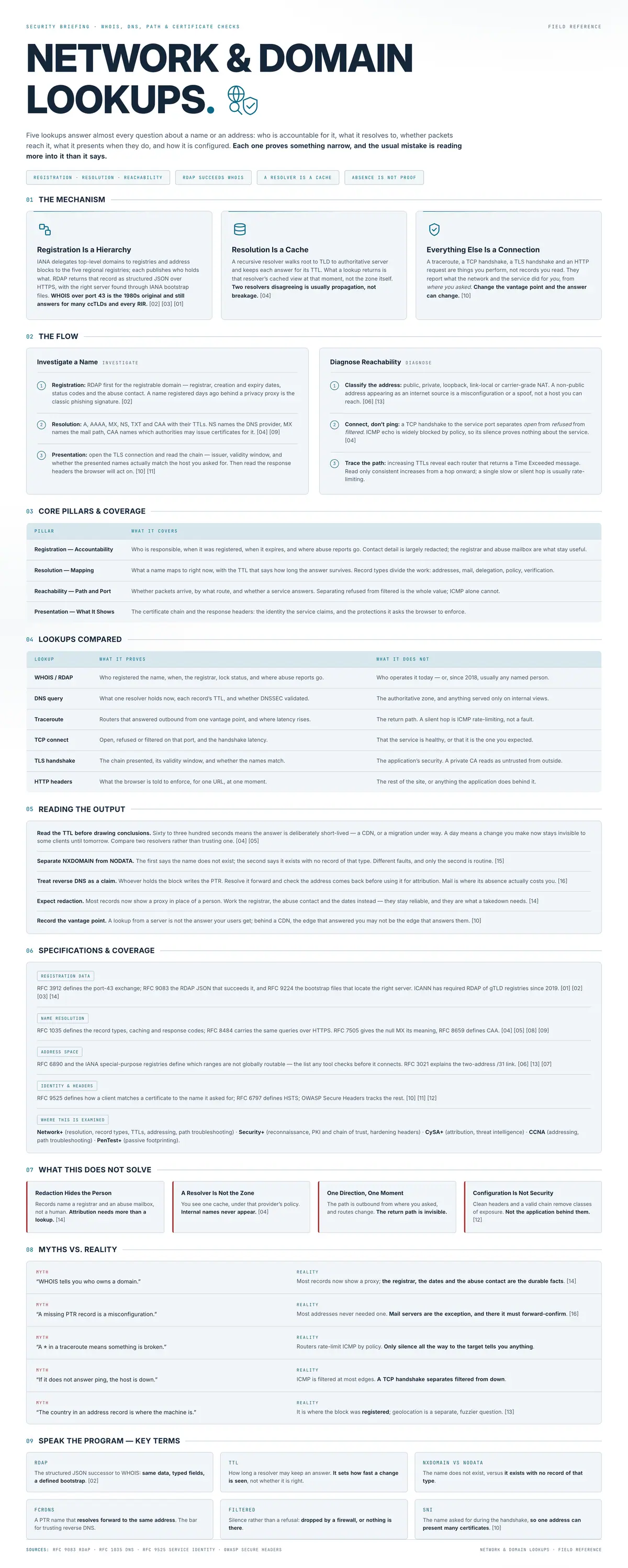
Five lookups answer almost every question about a name or an address: who is accountable for it, what it resolves to, whether packets reach it, what it presents when they do, and how it is configured. Each one proves something narrow, and the usual mistake is reading more into it than it says.
A security model where no user, device, or network flow is trusted by default — inside the perimeter or outside it. Each session is verified and authorized before access is granted, then re-evaluated continuously.
VPN gateways are internet-facing, always-on, and rarely patched on schedule — making them one of the most exploited entry points into corporate networks. From split-tunneling misconfigurations to unpatched appliance CVEs, a poorly governed VPN becomes the front door attackers actually use.
A flat network lets one compromised device reach everything else — microsegmentation contains the blast radius so a breach cannot spread into the next zone.
Every connection starts with a name lookup — DNS security makes sure that lookup can't be silently redirected, poisoned, or turned into a covert exfiltration channel.
Operational technology runs the physical world — valves, turbines, breakers, pumps — so a compromise isn't just a data-loss event. Safety and availability outrank confidentiality here, and the controls that work in IT can crash the equipment they're meant to protect.
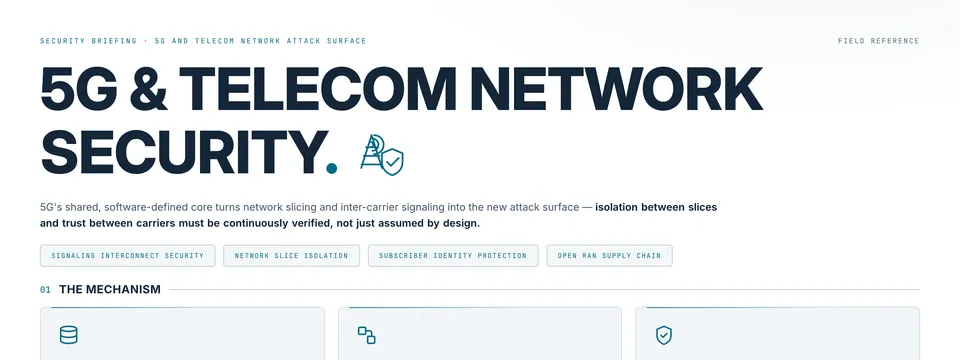
5G's shared, software-defined core turns network slicing and inter-carrier signaling into the new attack surface — isolation between slices and trust between carriers must be continuously verified, not just assumed by design.