Container and Kubernetes Security
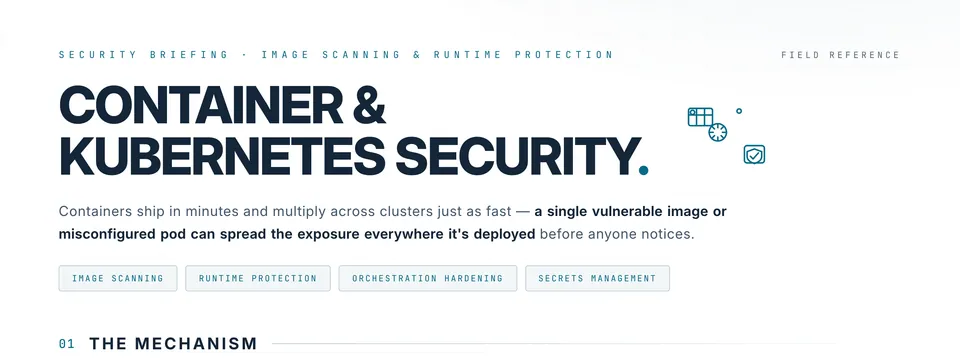
Containers ship in minutes and multiply across clusters just as fast — a single vulnerable image or misconfigured pod can spread the exposure everywhere it's deployed before anyone notices.
Cybersecurity Infographic Series · Cloud and Container Security
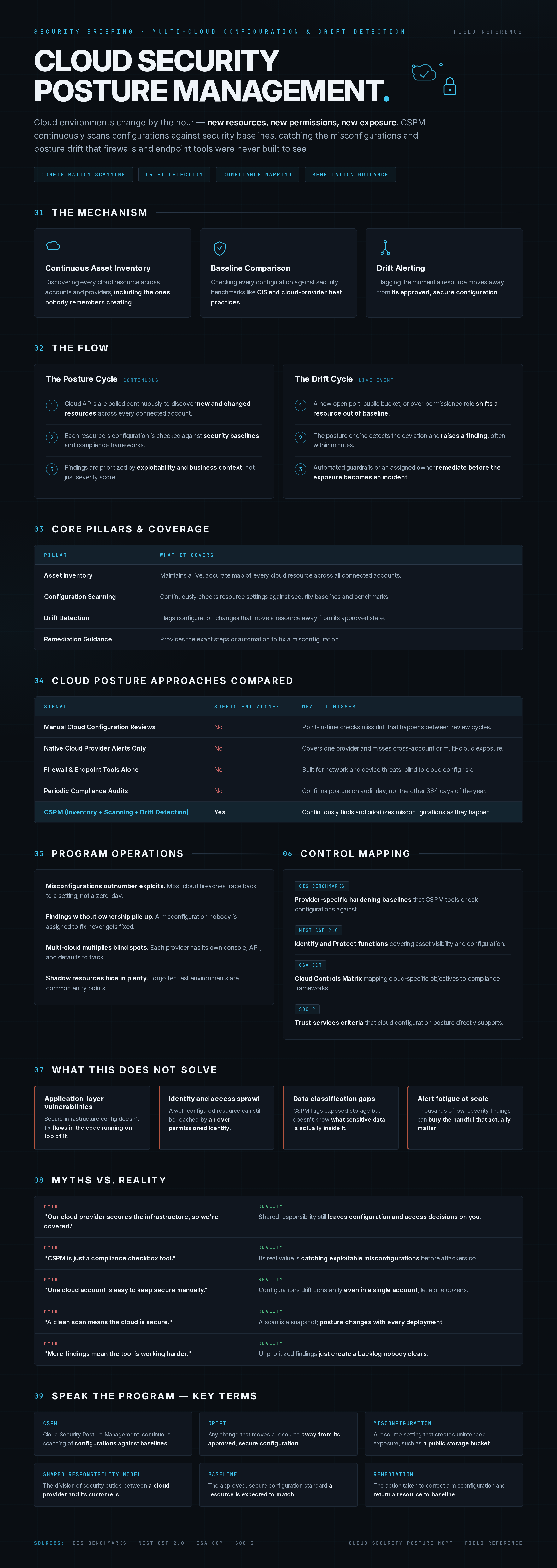
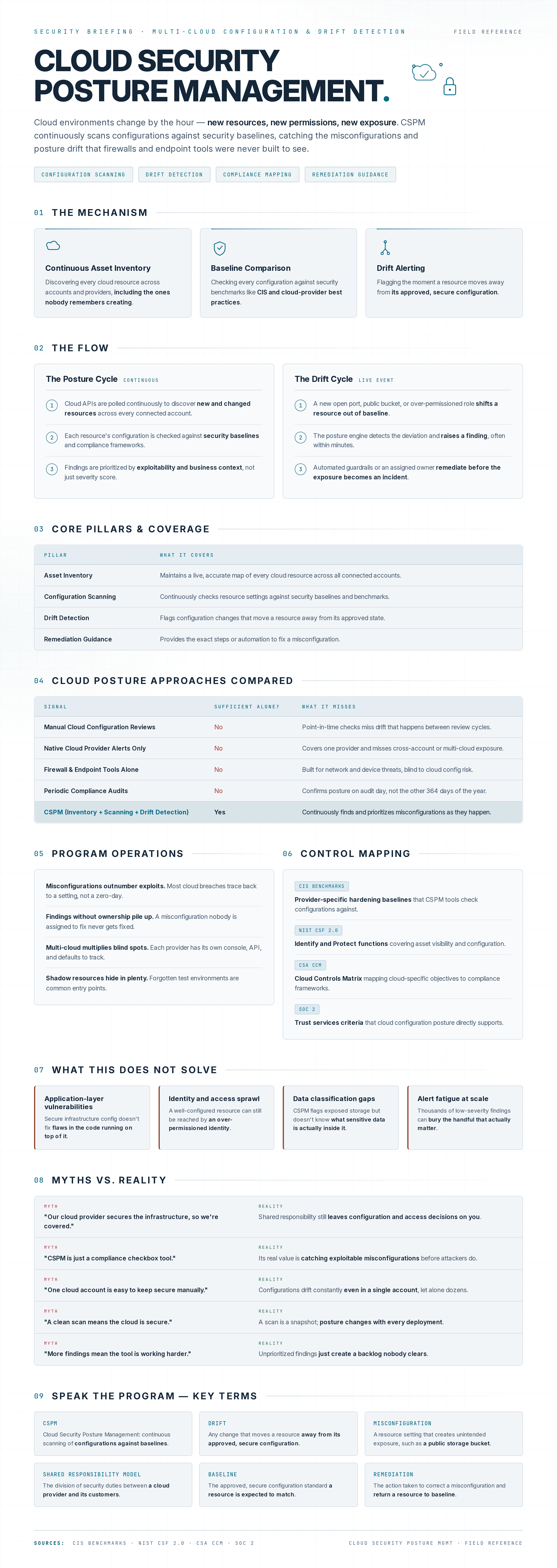
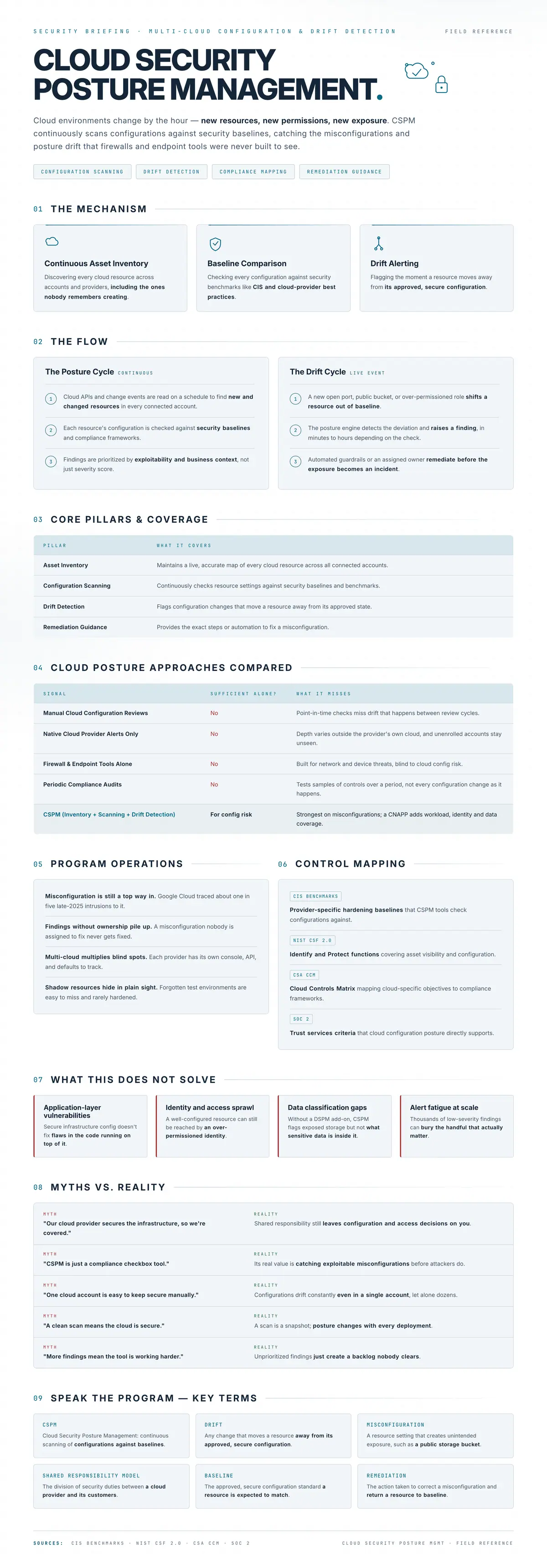
Cloud environments change by the hour — new resources, new permissions, new exposure. CSPM continuously scans configurations against security baselines, catching the misconfigurations and posture drift that firewalls and endpoint tools were never built to see.
Containers ship in minutes and multiply across clusters just as fast — a single vulnerable image or misconfigured pod can spread the exposure everywhere it's deployed before anyone notices.
Data now moves through dozens of cloud apps IT never approved — a broker sits at that chokepoint to see, control, and secure traffic that firewalls and endpoint agents never touch.
Every SaaS app is its own security perimeter with its own settings — SSPM continuously checks that perimeter against a baseline, instead of trusting that whoever configured it got it right once.
Cloud IAM roles and service accounts are almost always granted far more access than they ever actually use. That gap between granted and used permissions is exactly what defines a compromised identity's blast radius — and it's invisible to tools that only check resource configuration.
Kubernetes ships permissive by default, not secure by default — flat pod networking, unrestricted pod security, and unencrypted secrets are the starting point, not a misconfiguration someone introduced later.