Ransomware
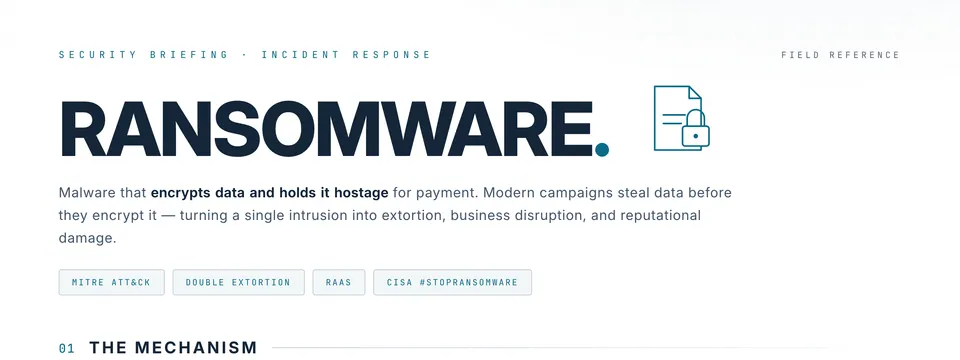
Malware that encrypts data and holds it hostage for payment. Modern campaigns steal data before they encrypt it — turning a single intrusion into extortion, business disruption, and reputational damage.
Cybersecurity Infographic Series · Threat Detection and Incident Response
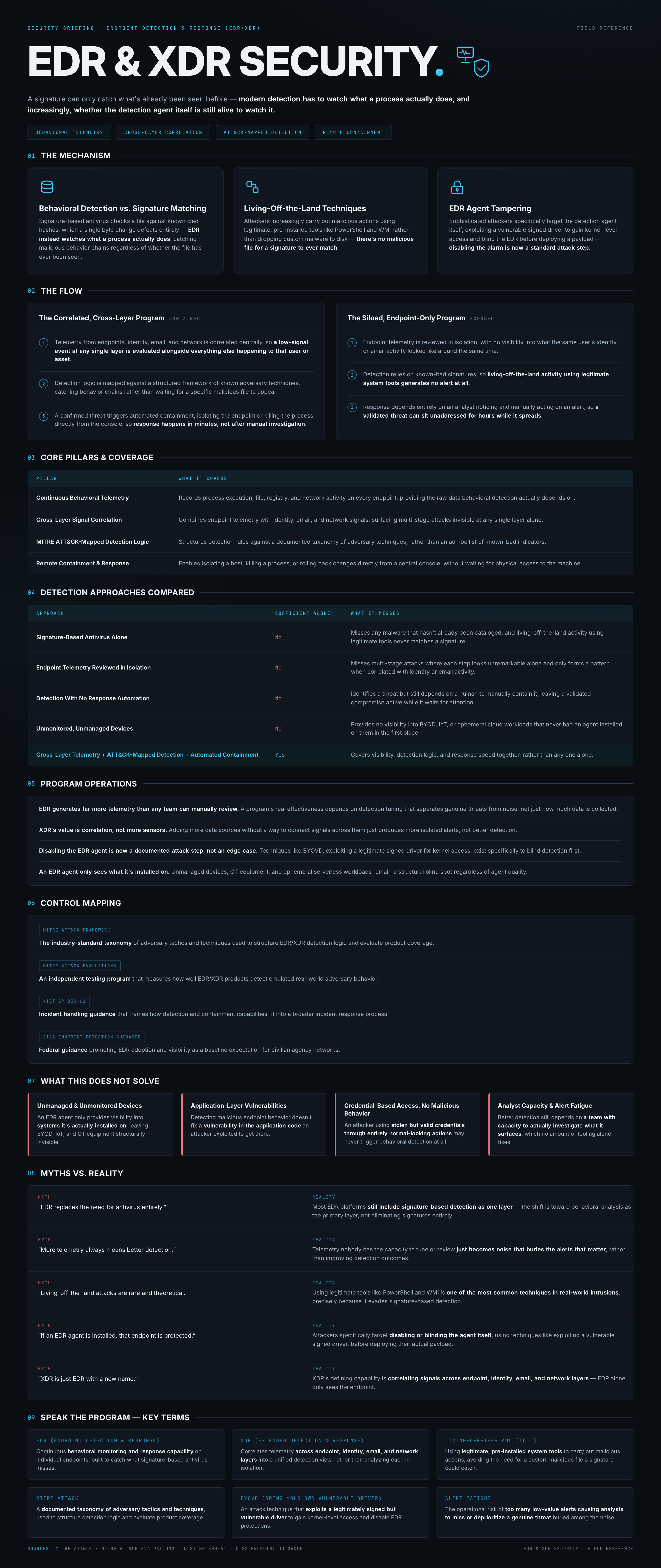
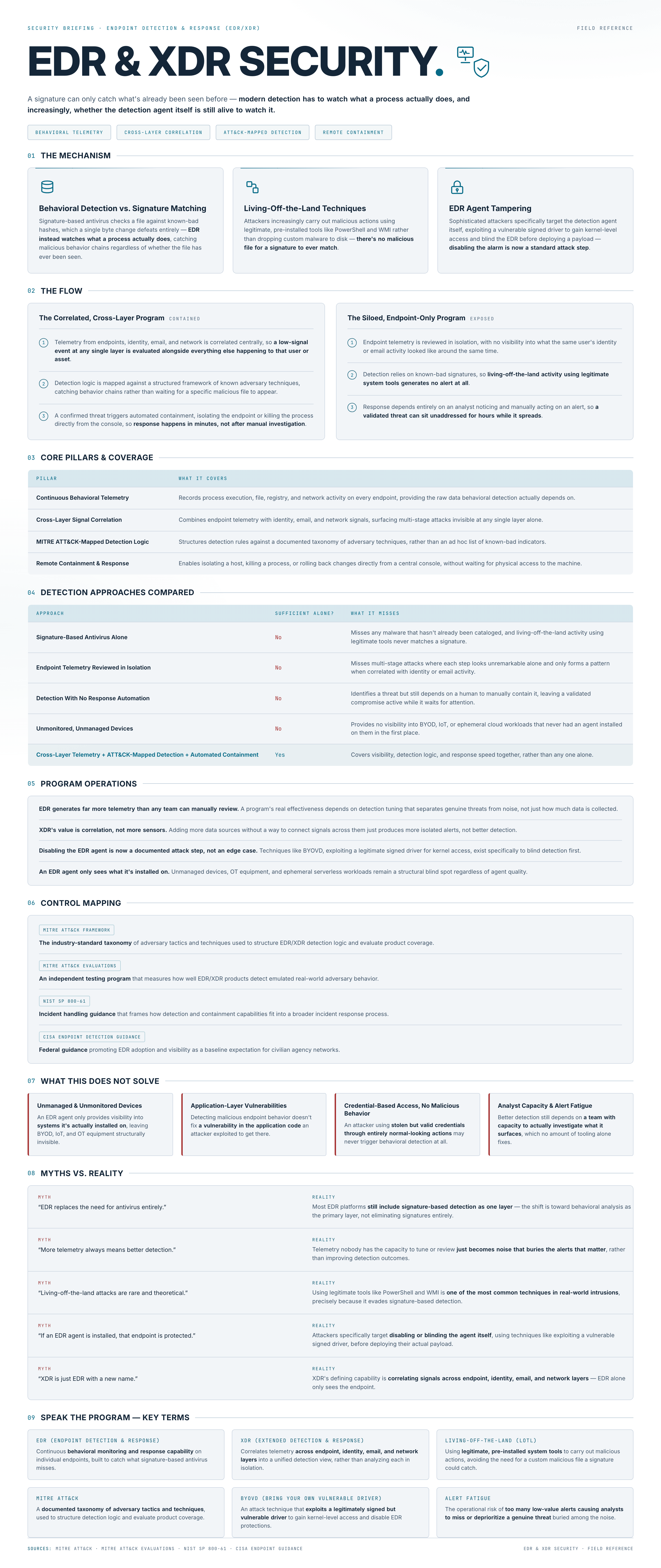
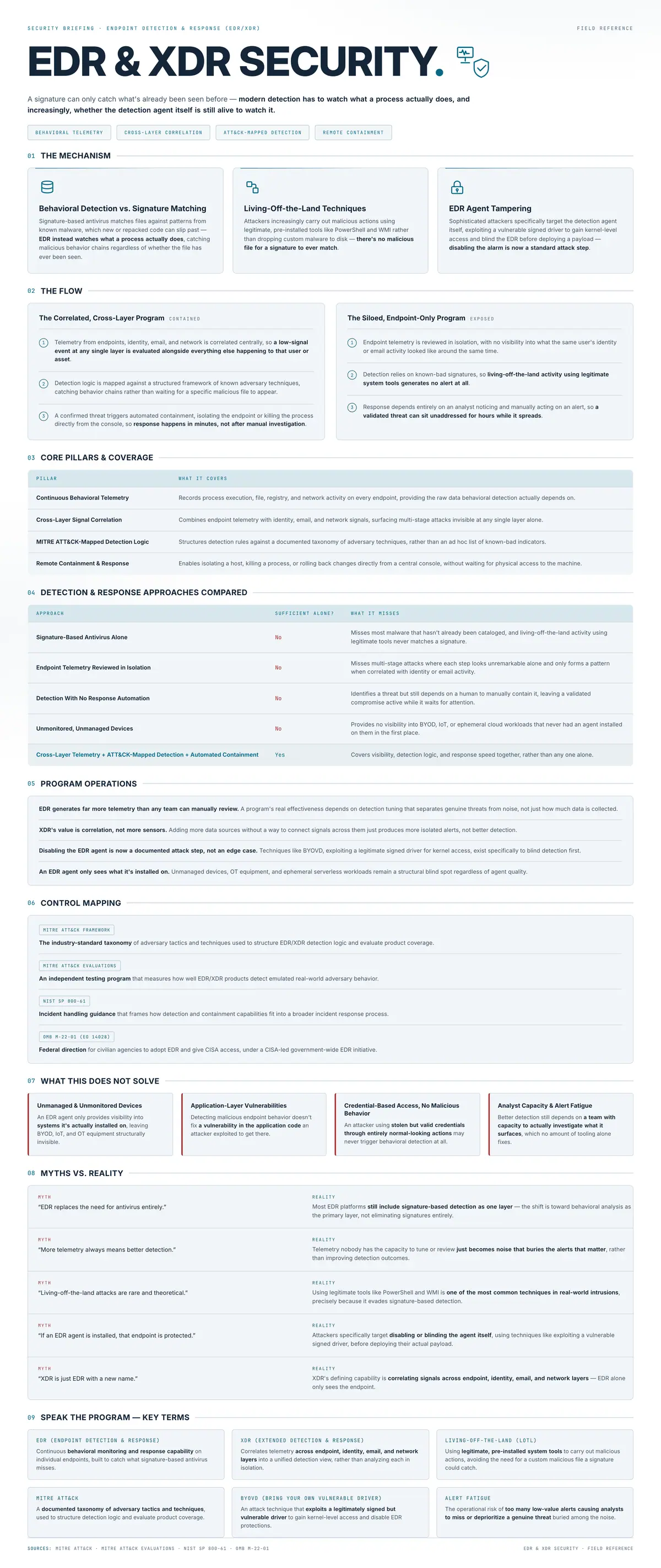
A signature can only catch what's already been seen before — modern detection has to watch what a process actually does, and increasingly, whether the detection agent itself is still alive to watch it.
Malware that encrypts data and holds it hostage for payment. Modern campaigns steal data before they encrypt it — turning a single intrusion into extortion, business disruption, and reputational damage.
The continuous process of finding, prioritizing, and closing weaknesses before adversaries can use them. A CVSS score alone doesn't tell you what to fix first — exploitability and business context do.
Every internet-facing asset an organization exposes — domains, subdomains, cloud services, and forgotten infrastructure — mapped continuously, not once a year. You cannot secure what you do not know you own.
A breach is not primarily a technology event — it's a decision-making event under pressure. Incident response turns a chaotic first hour into a rehearsed playbook, and tabletop exercises make sure that playbook actually works before it's needed for real.
Outages, disasters, and attacks are a matter of when, not if — the difference is how fast the organization gets back up. Business continuity keeps critical operations running through disruption, and disaster recovery restores the systems behind them within a defined, tested window.
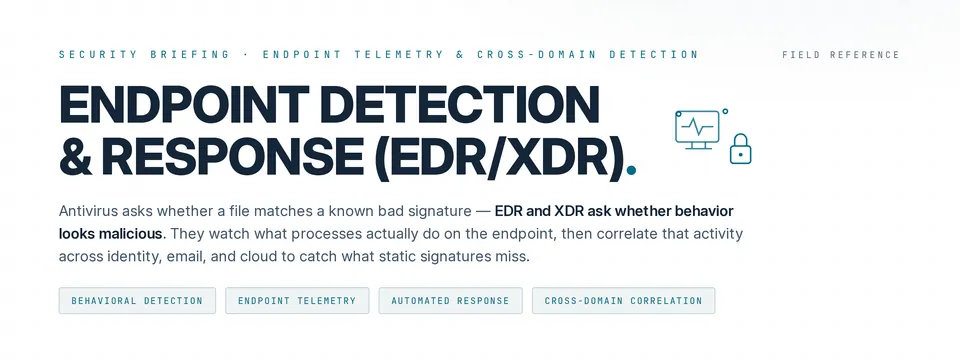
Antivirus asks whether a file matches a known bad signature — EDR and XDR ask whether behavior looks malicious. They watch what processes actually do on the endpoint, then correlate that activity across identity, email, and cloud to catch what static signatures miss.